
Unified commerce and unified ecommerce – are they the same? This is a frequently asked question by online brands and retailers. And while they both seem almost identical terms, sometimes even used interchangeably, they have different definitions. Choosing between a unified commerce platform and a unified ecommerce platform can determine whether a brand focuses on delivering a seamless omnichannel experience or streamlining backend efficiency.
Unified commerce vs. unified ecommerce
Although related, unified commerce and unified ecommerce have very different focuses that one must know as an online business to choose the right strategy.
Simply put, these two phrases represent different levels of customer experience and integration in ecommerce.
What is unified commerce?
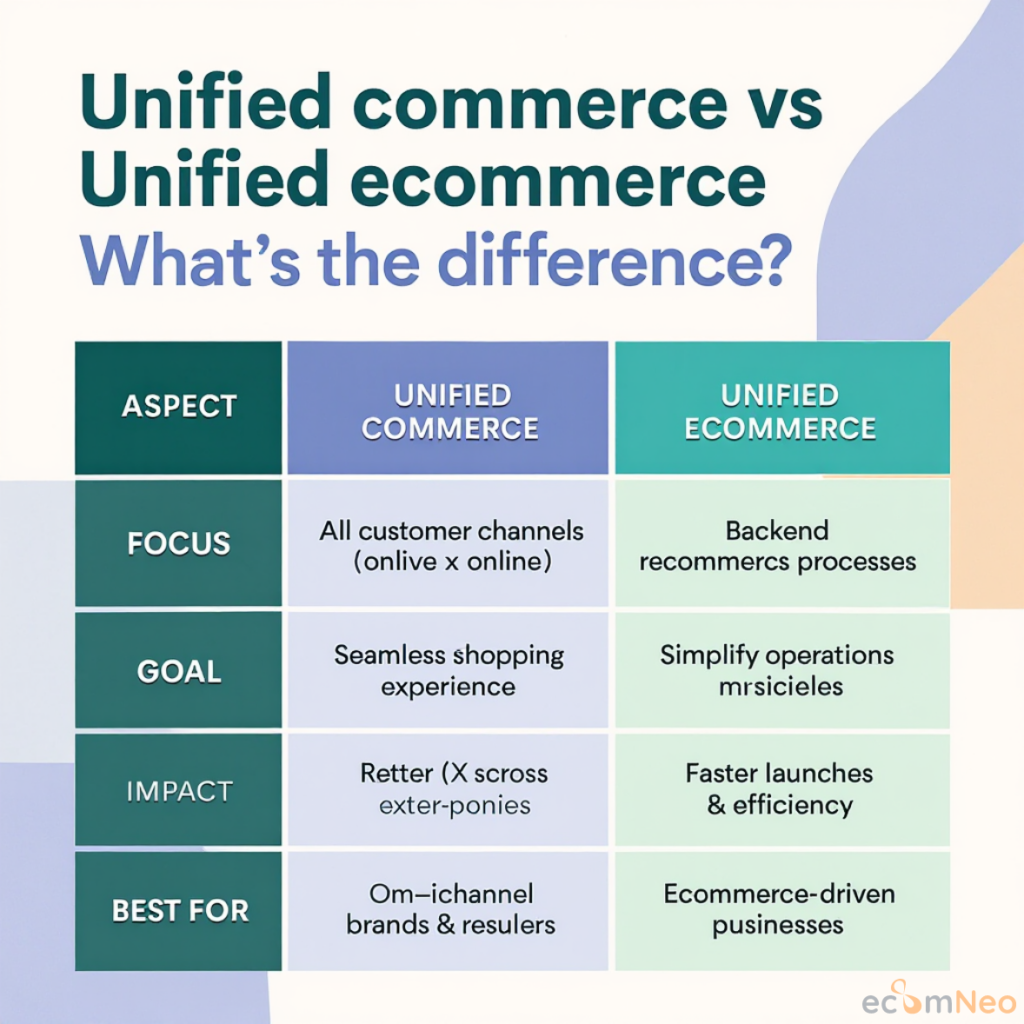
Unified commerce (also called unified retail commerce) is a broader term that covers the entire retail ecosystem, including online, offline, mobile, and other possible sales channels. Unified commerce supports an omnichannel retail strategy by combining these sales channels, various customer touchpoints, and backend systems into a single platform.
Let’s understand it with a simple example. Imagine a shopper adding a product to their cart through the mobile app. However, they proceed to pick up that product from the physical store. But their loyalty points update across all channels instantly. Through unified commerce, a customer can start a purchase on one sales channel and end it on another with zero friction.
What is unified ecommerce?
Unified ecommerce has a narrower scope compared to unified commerce. It focuses entirely on how backend commerce operations can be streamlined. A unified ecommerce platform integrates all ecommerce backend processes, such as catalog, pricing, product assortment, data enrichment, analytics, and more into one system.
Unified ecommerce eliminates the need for multiple disconnected tools required for managing ecommerce and streamlines every part of online operations.
For example, a brand selling on Amazon, Shopify, and Walmart uses one centralized platform to manage product content, tagging, and prices on multiple marketplaces.
Unified commerce or unified ecommerce – what does your business need?
While unified retail commerce emphasizes customer experience across online and offline sales channels, unified ecommerce enables operational efficiency for online brands and other business types.
Since ecommerce encompasses brands and retailers with both online and offline presence, and also businesses that purely operate online, unified ecommerce is a strategy suitable for both.
- Unified commerce is best for omnichannel retailers seeking integrated online + offline customer journeys.
- Unified ecommerce is best for online-first businesses looking to eliminate silos and scale faster across marketplaces.
What are the benefits of a unified commerce strategy?
Unified commerce has a more generalized application that’s beneficial for both businesses and their customers. Here’s exactly what unified commerce offers:
1. Seamless omnichannel experiences
For businesses that have both online and offline stores, like fashion & apparel brands, pharma companies, or even marketplaces, unified commerce enables an integrated and more personalized shopping journey. This is irrespective of the channel customers choose to shop from.
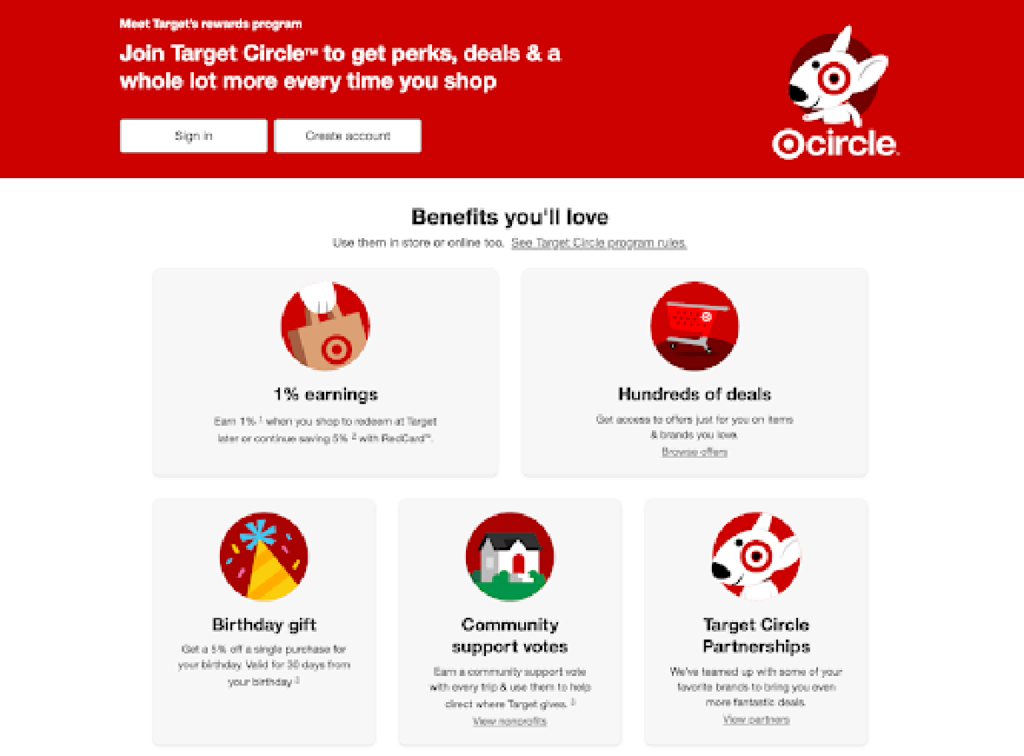
Take Target as an example. It has both online and physical stores, and is a leader in the omnichannel retail space. Suppose a customer wants to buy a set of headphones the same day. They can choose to purchase it online and then pick it up from the physical store. Target’s Circle Loyalty program would link the purchase to the shopper’s account, ensuring personalized recommendations the next time they shop online.
Even if the customer had opted for same-day delivery via Shipt, the same product data, pricing, and promotions would apply – as a result of their omnichannel retail strategy.
This frictionless experience is a result of a seamless ecosystem, made possible due to a unified commerce platform.
Source: Ecommerce Fastlane
2. Enhanced convenience
In a similar scenario, where a customer purchased a product online and wants to return it, they can choose to do so online or by visiting the physical store. The offline store will have all the information about the customer and their purchase history to enable a swift return or exchange of the product.
3. Better customer support
Businesses can offer better customer service to shoppers when their support teams have access to complete customer information and purchase history. Here, integration of online and offline sales channels is necessary to provide faster, more efficient, and personalized assistance.
4. Increased operational efficiency
A unified commerce platform enables businesses to centralize systems and automate processes like inventory management and order fulfillment. Businesses can also sync crucial data across their online and offline stores to reduce overselling and prevent stockouts, eliminating negative shopping experiences.
What are the benefits of unified ecommerce?
Unified ecommerce aims to eliminate the challenges businesses face with fragmented systems that cost more, create data silos, and make the entire ecommerce process complicated. Here’s why businesses choose a unified ecommerce platform:
1. Simpler approach to managing ecommerce
Ecommerce is already a complicated process at the backend. Thanks to the various, yet crucial aspects like catalog, price, product inventory management, and more. For long, businesses have been leveraging different tools and platforms to manage each of these backend processes that ensure a smooth frontend for shoppers.
A market report shows that ecommerce businesses lose between 20% to 30% annual revenue as a result of inefficiencies caused by data silos.
Imagine this scenario, for instance. A home appliances retailer uses one platform to manage pricing, and another to manage product content. Now, because these two platforms don’t interact with each other, the pricing tool updates a refrigerator model with a 10% discount, while the catalog system still shows the old price on Amazon. As shoppers see a higher price than on the retailer’s website, they abandon the purchase and instead buy from the competitor.
Therefore, data silos from fragmented systems can result in inefficiency and poor customer experiences, costing sales.
2. Informed decision-making
A unified ecommerce platform not only brings together price tracking and catalog management, but it also integrates analytics. This helps companies gain a holistic view of their listings’ health, compare pricing strategies against competitors, understand customer sentiments towards the brand, and more. All of this data enables strategic decisions and accurate forecasting, crucial for brands to win in the market.
3. Enhanced efficiency across teams
The technical work that goes into operating an ecommerce site or a brand’s products on different sales channels is doubled when teams work in silos. This only widens the gap between teams and across departments, increasing the operational efficiency and costs. Also, leaves more room for errors that impact sales opportunities and revenue growth.
Unified ecommerce platforms remove the complexity and redundancy of running multiple systems for catalog, pricing, enrichment, digital asset management, and analytics.
4. Faster time-to-market
As unified ecommerce systems centralize data and functionality, brands and retailers can push updates and launch new products across multiple sales channels instantly. This is possible as there are no integration delays and data errors that usually take weeks or months to sort. Faster rollouts of product catalogs help businesses stay relevant in an evolving ecommerce landscape and respond to market changes quickly.
Making the unified shift
Unified commerce and unified ecommerce address different modern-day problems. Unified commerce is ideal for omnichannel retailers who want to deliver a frictionless, consistent experience across online and offline channels. Unified ecommerce is best for brands that aim to boost their operational efficiency, speed, and scalability across multiple sales channels.
And some businesses can benefit from both strategies based on their growth stage and channel mix. What they need is to identify whether their biggest gap exists in customer experience or operations.
Fragmented ecommerce is not only about tools, it’s also about losing sales to competition. Disconnected systems cause delays, errors, and higher costs. Start today to launch faster, scale smarter, and operate leaner.
Leave a Reply